Graphics updates on the project: Live streaming at 360 degrees and applications
Graphics updates on the project: Live streaming at 360 degrees and applications
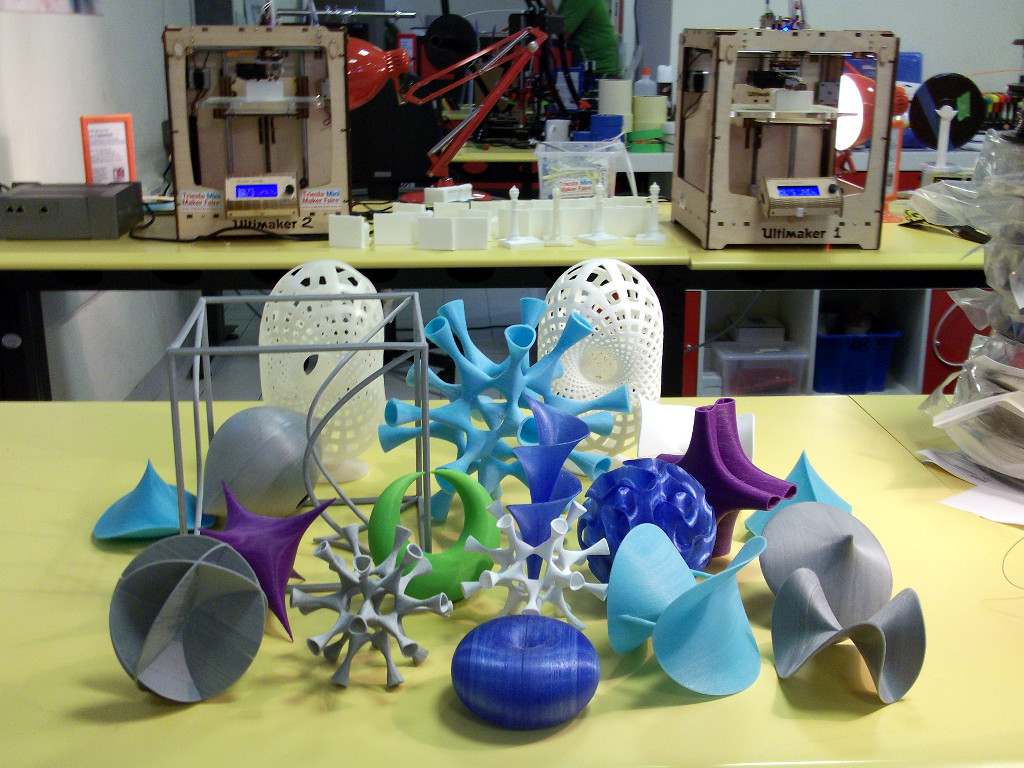
Abbiamo fatto un tentativo di riprodurre degli oggetti della mostra “IMAGINARY Open Mathematics Exhibition” (www.imaginary.org), utilizzando delle stampanti 3D desktop a basso costo. Il progetto internazionale “IMAGINARY Open Mathematics Exhibition” dell”Istituto tedesco “Mathematisches Forschungsinstitut Oberwolfach” comprende gallerie di oggetti tridimensionali che sono unici, attraenti esteticamente ed hanno un significato matematico. Qui si illustra la realizzazione di vari oggetti didattici, utilizzando la nuova tecnologia di stampa 3D a basso costo, basata sulla tecnica di produzione additiva di tipo “Fused Deposition Modeling” (FDM) e l”uso di plastica biodegradabile online casino PLA. L”obiettivo finale e” quello di supportare i musei, le scuole e gli istituti di istruzione superiore nei paesi meno attrezzati di infrastrutture scientifiche.
IMAGINARY Math Exhibition using Low-cost 3D Printers
We have made an attempt to reproduce few objects of the IMAGINARY Open Mathematics Exhibition (www.imaginary.org) using low-cost, desktop 3D printers. The IMAGINARY open math is an international project by the Mathematisches Forschungsinstitut Oberwolfach in Germany and includes galleries of volumetric objects that are unique, have aesthetic appeal and mathematical meaning. We illustrate here the printing of these diverse learning materials using new 3D affordable printing technologies based on Fused Deposition Modelling (FDM) and the use of biodegradable plastic PLA. The final goal is to support museums, schools and higher education institutions in countries with limited scientific infrastructure.
See full article at: http://fr.arxiv.org/abs/1409.5595
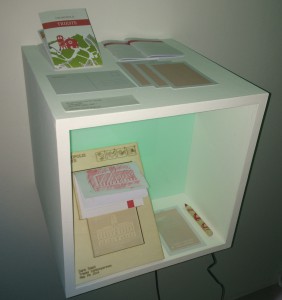
Il 19 settembre alle 19 presso lo studio Tommaseo in via del Monte 2/1 a Trieste è avvenuta la premiazione del progetto Cromopolis, vincitore del premio Gillo Dorfles al concorso di design 2014 di Trieste Contemporanea. Per maggiori informazioni: link.
Here the time-lapse video showing ~7 hours of activity of our ICTP SciFabLab booth (in collaboration with the Immaginario Scientifico) at the Science Picnic (Znanstveni Piknik) in Zagreb (14 September 2014). Also on Facebook.
Sometimes ideas just linger in the back of your head for a long time before being really brought to life other times you are obliged to get from idea to prototipe in a short time.
This is what happened with this idea, that just flashed into my mind a couple of days before the deadline for the entries to the Rome maker faire and after getting approved HAD to be done.
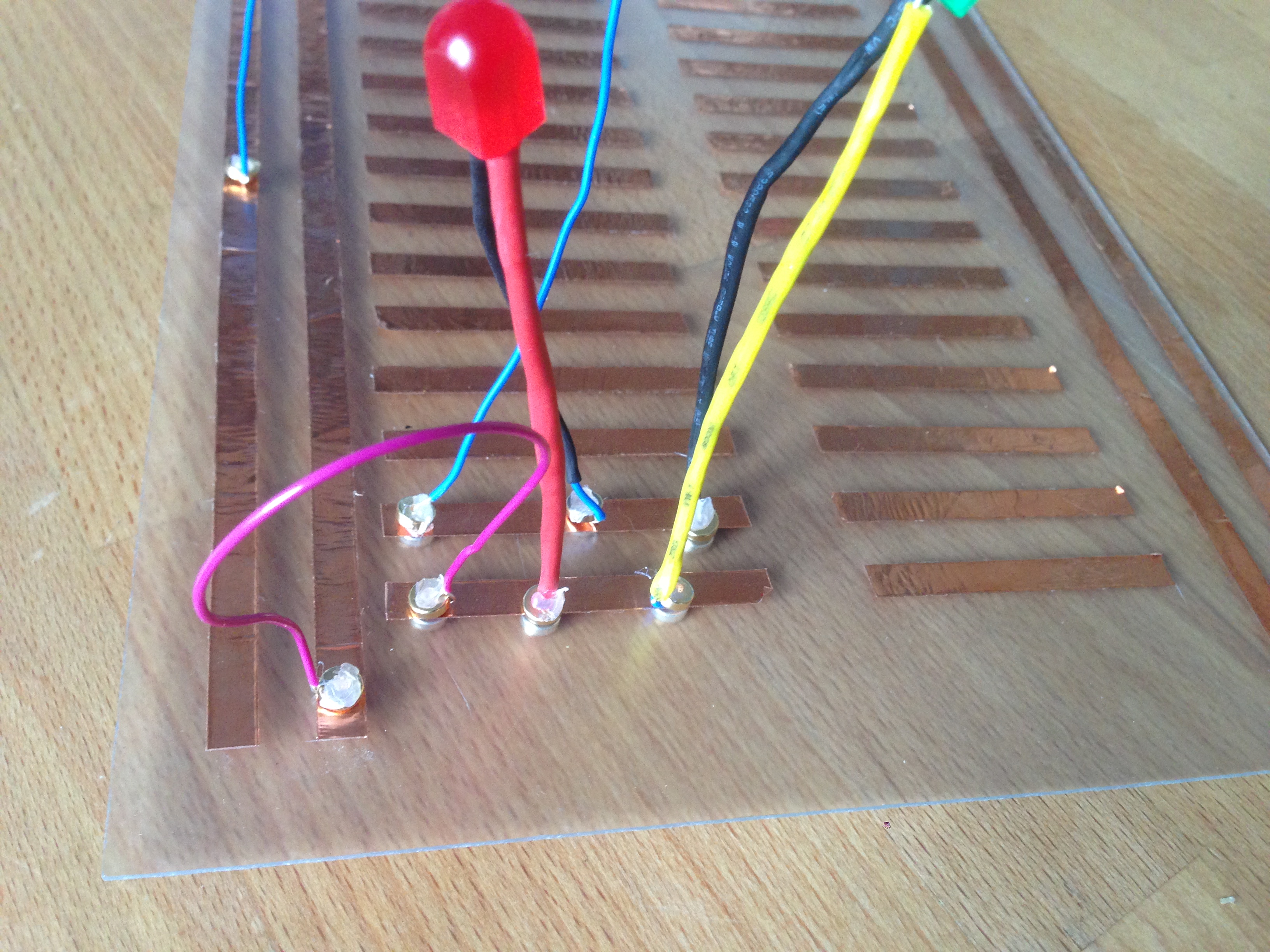
While teaching electronics to children I found out that the real problem was the hardware, more than the software. Breadboards are a great tool but you need a lot of attention to get all the connections right and small fingers are not that good at doing it. So how about a bigger breadboard? Maybe with an easier way of connecting stuff?
This is how the first rough prototipe was born, but then came the SciFabLab with the lasercutter…
lo scopo di tale progetto è quello di ricercare il centro di iniziale rotazione del ginocchio, punto anatomico di riferimento nella flesso-estensione di tale articolazione che fisiologicamente presenta un moto associato di roto-traslazione.
La curiosità di approfondire tale argomento, è nata da quanto scritto da Insall (il padre delle protesi del ginocchio) che aveva messo in luce la “scarsa significatività degli studi sulla cinematica del ginocchio basati su una localizzazione anatomica del centro di istantanea rotazione”.
La prima fase del progetto ha l’obiettivo di creare tramite stampa 3D di basso costo a tecnologia FDM un modello didattico che riproduca il movimento fisiologico rototraslatorio tra un capo articolare femorale ed un capo articolare tibiale. Gli attuali modelli, infatti, quelli ad esempio riproposti sugli scheletri che troviamo nelle aule di anatomia, semplificano tutta la meccanica flesso-estensioria con un semplice perno che determina un puro moto rotatorio. Ciò fa sì che mentre sui libri vengono riportate descrizioni particolarmente accurate sulla fisiologia di questo moto articolare, nella pratica lo studente non ne può assolutamente apprezzare gli effetti.
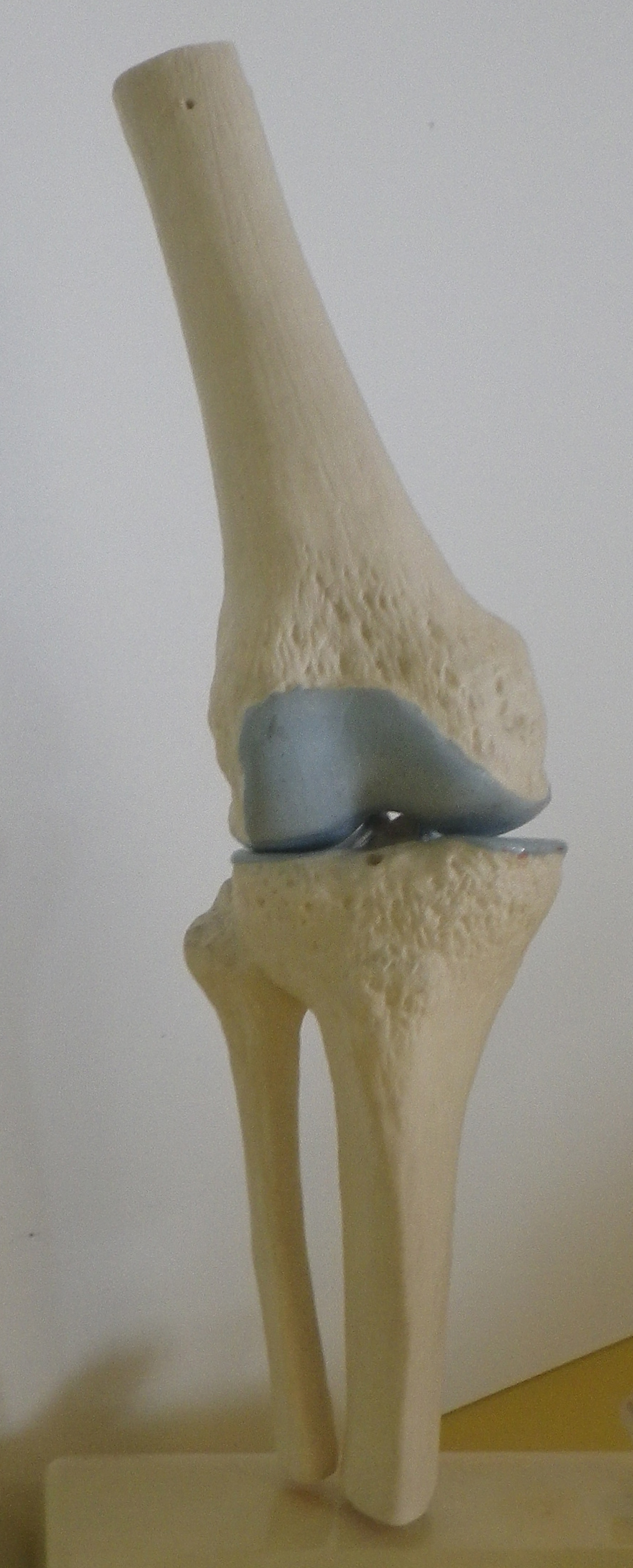

Dalle foto sopra riportate è possibile notare il tipo di movimentazione a “cerniera” che normalmente viene utilizzata per l’articolazione del ginocchio.
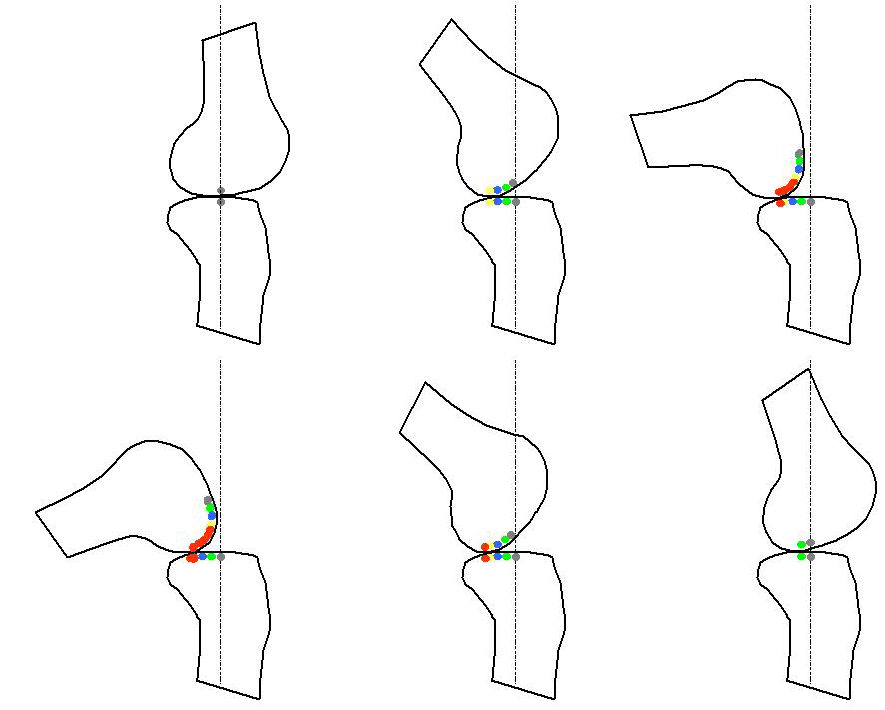
Nello specifico, il moto roto-traslatorio prevede che i condili femorali per i primi 25-30° di flessione (della coscia sulla gamba), rotolano sui piatti tibiali; successivamente, dai 30° in poi, al moto di rotazione si associa una traslazione che diventa sempre più importante con l’aumentare della flessione (fai clik sull’immagine per attivare l’animazione).
Ancora non si riescono a comprendere le modalità di gestione della geometria dal software e sembra che ragioni a modo suo =( . Lo stesso file stampato al primo tentativo, dopo alcune modifiche dimensionali, non è più stato letto. L’idea vincente è stata quella di aprire, modificare e salvare in Autocad il file generato dal software del laser cutter.
Abbiamo scoperto quindi che due curve, diverse soltanto nelle dimensioni, non sono state correttamente lette anche dopo essere state rigenerate.
Nonostante ciò, abbiamo trovato un compromesso e il risultato per l’icona del municipio è ottimo, soprattutto grazie all’aiuto di Carlo!

Dettaglio icona municipio di Trieste
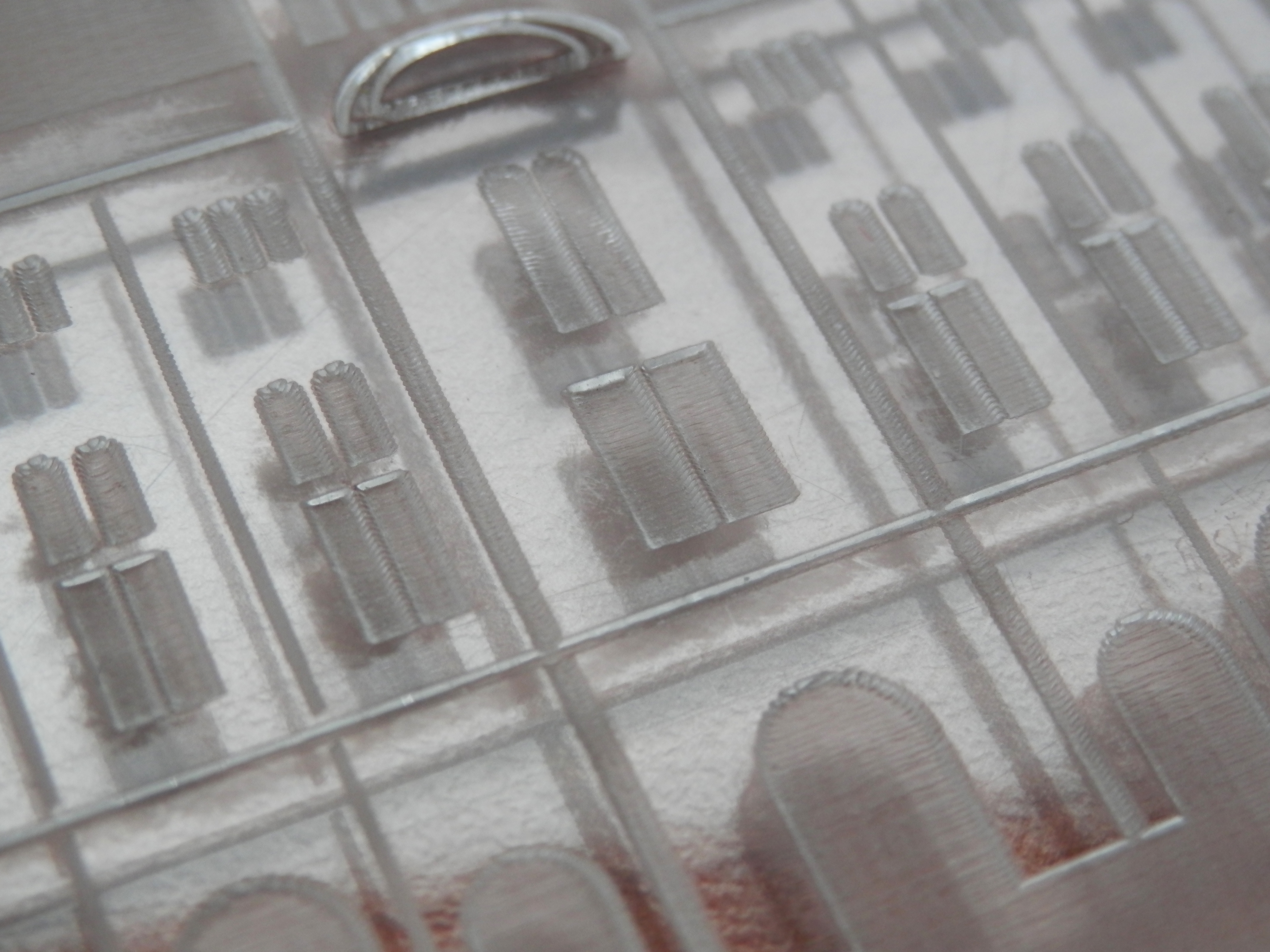
Dettaglio icona municipio di Trieste
Altra prova è stata quella di una texture sull’icona dell’Arco di Riccardo è stato impostato prima un engraving generico sull’oggetto e poi un engraving leggero sull’icona, così l’effetto sul foglio di carta è quello di una leggera grana.
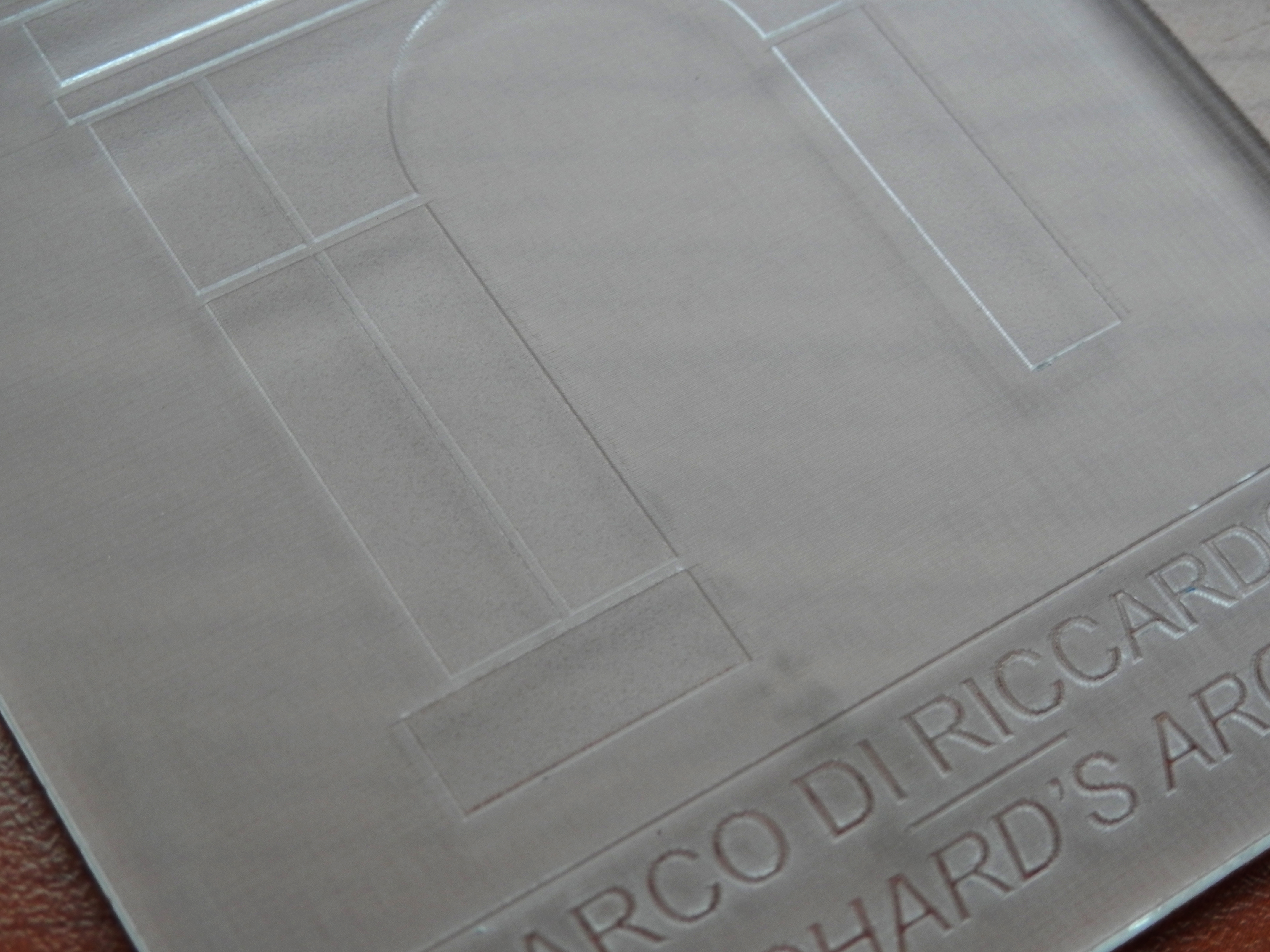
Differenza due spessori engraving
Inoltre, per il prototipo definitivo è stato scelto di ridurre la forza del laser in modo da essere visibile per il frottage e impedire l’intoppo della matita.
I risultati sono ottimi!
ICTP SciFabLab was just approved and can now be seen by the world in the official list at https://www.fablabs.io/
l’ICTP Scientific Fablab e’ stato appena inserito ufficialmente nella rete mondiale https://www.fablabs.io/

To print the mathematical shapes of the project “Math Exhibition”, I’ve selected the Ultimaker printers that are available, amongst others, in the SciFabLab.
There are two of the “original” model, one with a dual extruder.
After months of use, my overall assessment is positive: they are good machines, fast and accurate, despite some minor defect.
For these printers I’ve used the Cura program to “compile” the 3D model and transform it into a set of G-code instructions to send to the printer.
Actually, the Cura command “Load Model File” enables the loading of 3D models in these formats: STL, or OBJ, DAE, AMF, etc.
The first problem that has occurred in Project “Math Exhibition” was the fact that some of the 3D models were provided in X3D format, that “Cura” is not currently able to import.
Before performing other steps, it was necessary to convert the X3D files in STL format.
For this operation I have tested the use of two tools:
Meshlab (open-source, developed by the ISTI – CNR research center, http://meshlab.sourceforge.net/)
Netfabb (http://www.netfabb.com/)
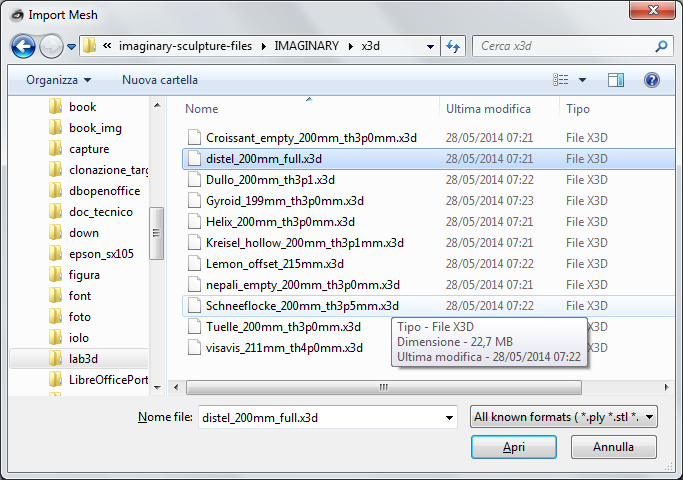
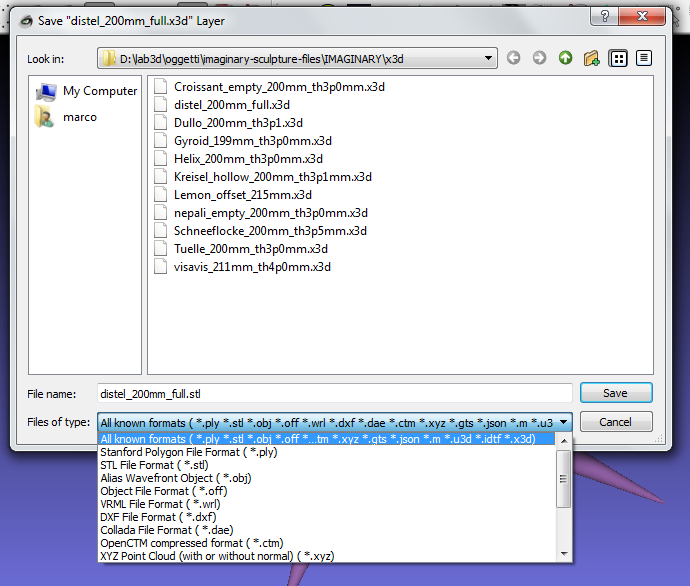
Select: File – Import mesh
Select the x3d file. (for example: distel_200mm_full.x3d).
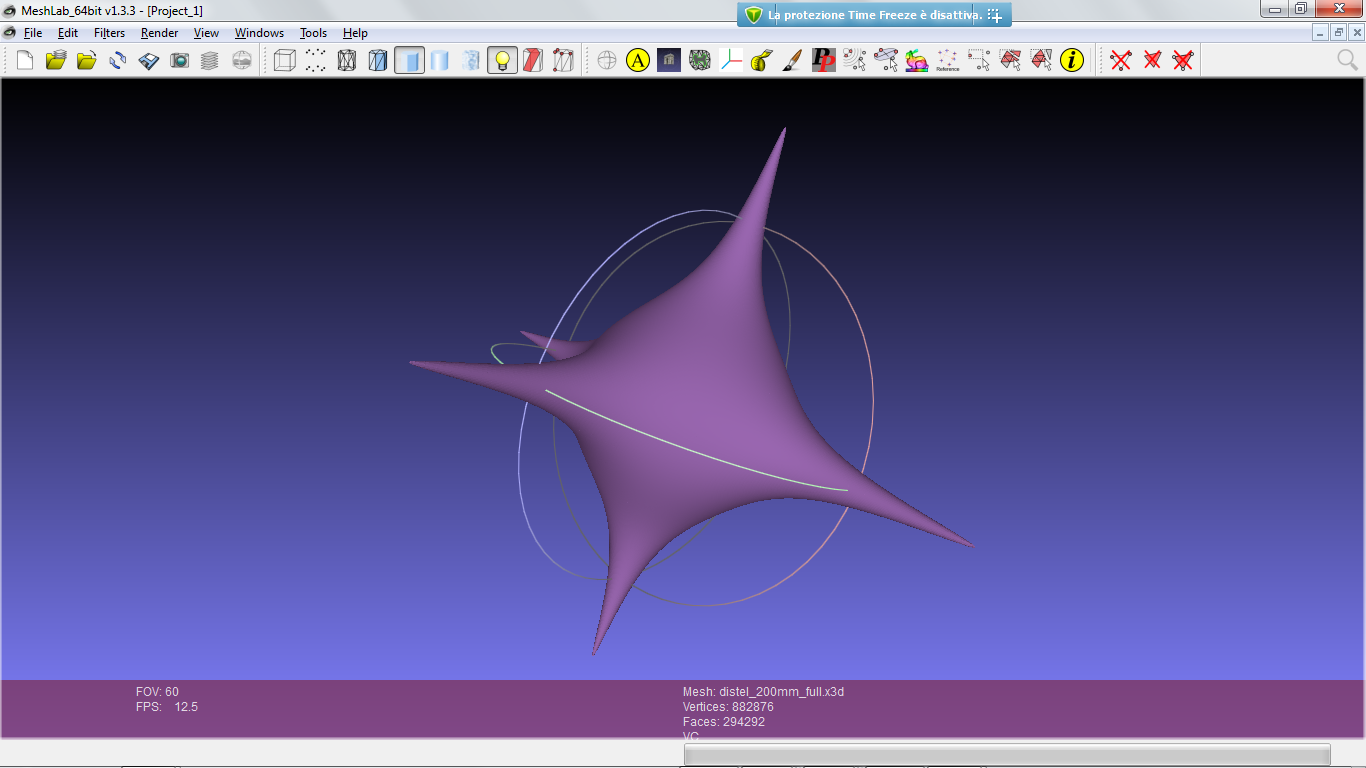
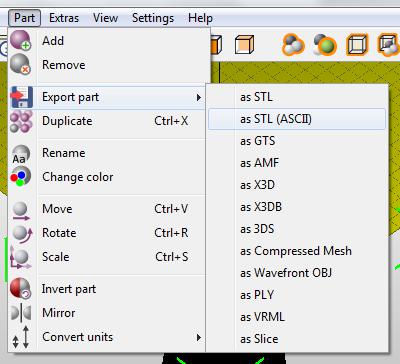
To export in new file format: File – Esport as:
Select: Project – New Project
Project – Add part
Select the x3d file. (for example: distel_200mm_full.x3d).

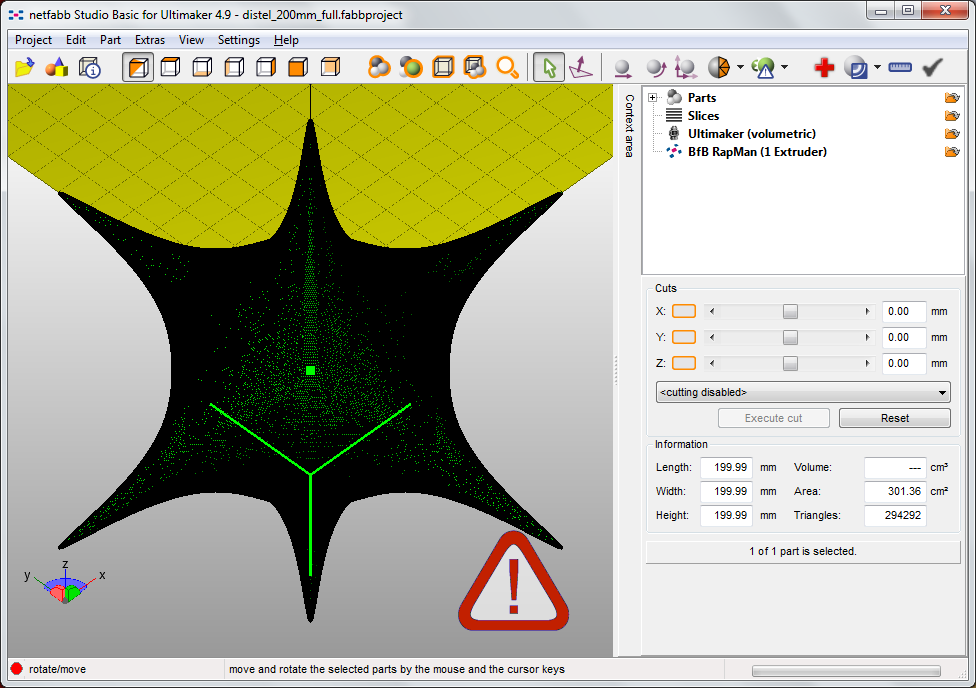
To export in new file format: Part – Esport part – as STL (Ascii)
Marco Rainone
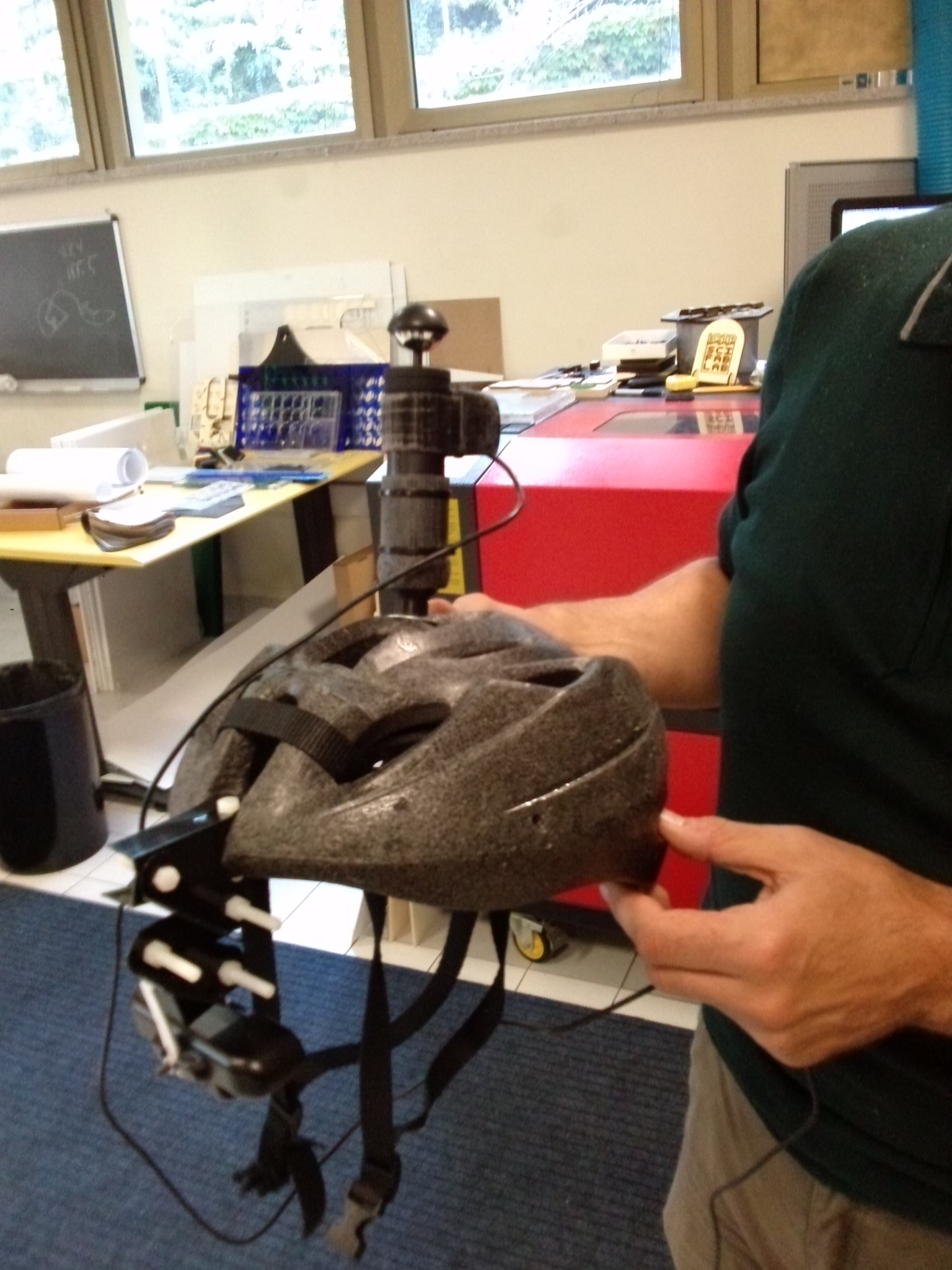
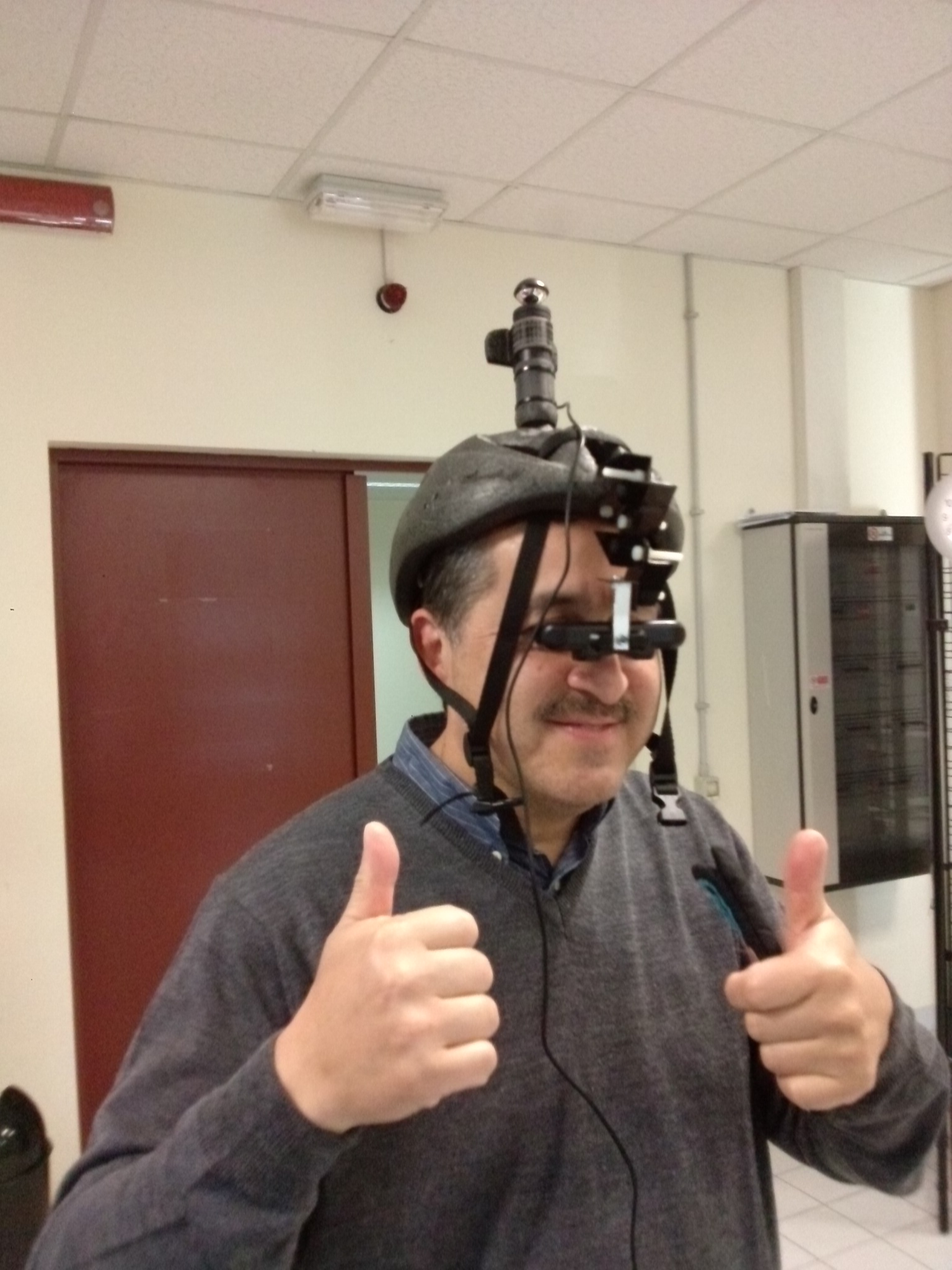
This project aims to build up a low-cost prototype system for cognitive studies around a 360 degrees panoramic vision in real time. The final goal is to have an original broadcast TV channel that transmits and covers live a full 360 degree vision. The first phase of the project is to recreate a pair of 360 degree glasses to understand better the technology and requirements. The final 360 degree transmission will be to display in a modular array of different screens (circular or planar).